
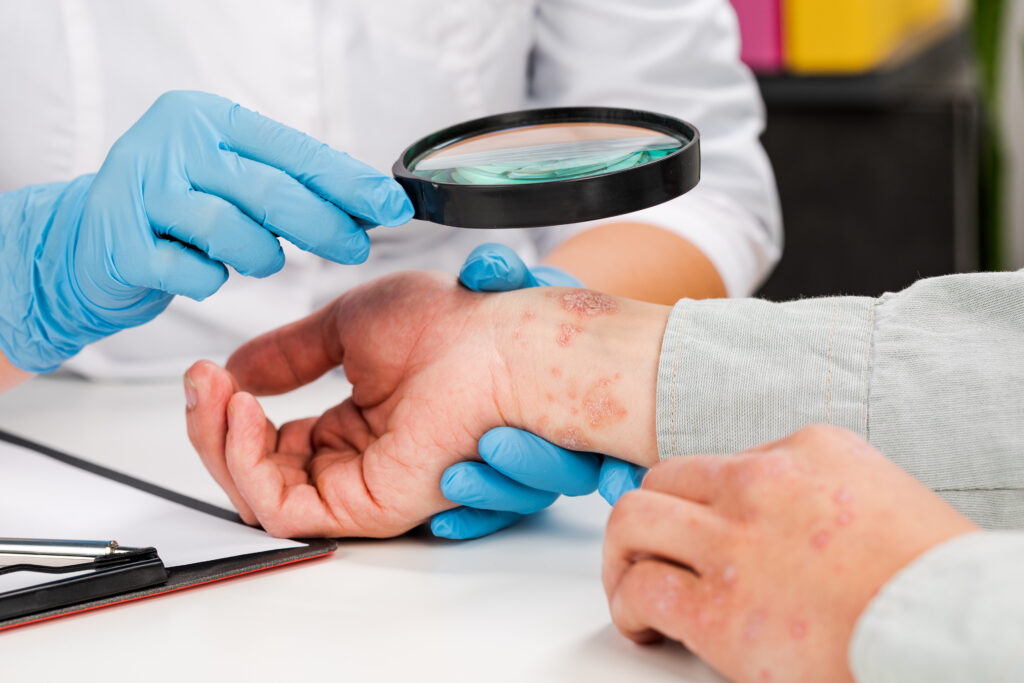
What Is Psoriasis?
Psoriasis is a long-lasting skin condition. It causes red, scaly patches on the skin. These patches can be itchy or sore. The primary keyword, psoriasis, refers to a disease where skin cells grow too quickly. As a result, thick, dry scales form on the skin. Although psoriasis is not contagious, it can affect daily life. According to the World Health Organization (WHO), millions of people worldwide live with psoriasis. While it can start at any age, it often appears in adults. Early treatment can help manage symptoms.
Common Symptoms of Psoriasis
Psoriasis symptoms can vary from person to person. However, some signs are more common. For example, you may notice:
Sometimes, symptoms can get worse during cold weather or after stress. But, with proper care, flare-ups can be managed.
Causes and Risk Factors
Doctors do not know the exact cause of psoriasis. Still, it is linked to the immune system. In psoriasis, the immune system attacks healthy skin cells by mistake. This causes new skin cells to form too quickly. Several risk factors can increase your chance of getting psoriasis. These include:
Although anyone can get psoriasis, it is more common in adults. If you have a family member with psoriasis, your risk is higher.
How Psoriasis Is Diagnosed
Doctors usually diagnose psoriasis by looking at your skin. Sometimes, they may take a small skin sample. This is called a biopsy. The sample is checked under a microscope. This helps rule out other skin problems. In most cases, no special tests are needed. However, if joint pain is present, your doctor may order blood tests or X-rays. Early diagnosis can help you start treatment sooner.
Treatment Options for Psoriasis
There is no cure for psoriasis, but many treatments can help. Your doctor will choose the best option based on your symptoms. Common treatments include:
For mild cases, creams may be enough. But, for severe psoriasis, stronger medicines or light therapy may be needed. According to the Centers for Disease Control and Prevention (CDC), following your treatment plan can help control symptoms.
Lifestyle Tips and Prevention
While you cannot prevent psoriasis, healthy habits can reduce flare-ups. For instance, you can:
Additionally, regular exercise and good sleep can help your body cope with stress. Because triggers are different for everyone, keeping a symptom diary may help you spot patterns.
When to See a Doctor
If you notice red, scaly patches that do not go away, see a doctor. Also, if your symptoms get worse or you have joint pain, seek medical help. Early treatment can prevent complications. Remember, psoriasis can affect your quality of life. Therefore, talking to a healthcare professional is important.
Consult a healthcare professional for personalized advice on psoriasis.